Showing posts with label Haute Couture. Show all posts

Saturday, 27 January 2024

Sous le Pont: Maison Margiela Artisanal ~ Spring/Summer 2024


The ritual  of dressing is a composition of the self. With the body as our canvas, we build an exterior expressive of the interior: 
a form of emotion ~ Maison Margiela


Video courtesy of: Maison Margiela


Video courtesy of: Vogue


It was one of those rare, unique moments, a moment obliquely reminiscent of those glorious, vintage years in John Galliano's career—the mid 1990s—when, just before landing first at Givenchy and then transferring over to Dior, each (thematic) Galliano show, every season, was something equally to anticipate as well as to behold; confectionary occasions of which dreams and fashion legends are spun: meticulously constructed venue sets worthy of Hollywood at its Golden Age; exquisitely, painstakingly confected articles of hand-crafted clothing; bias-cut, light-as-air gossamer dresses; perfectly styled and maquillaged models; quarried historical details and aesthetics of long-lapsed eras; that sense of theatrical drama and excitement that is so lacking in most collections on display today. It was all there on the drizzly night of January 25th, on the Left Bank of the River Seine.

Reportedly consuming twelve months of preparation and experimental-technical creation and staged in a constructed 1920s “speakeasy”—complete with floor-to-ceiling gilt-framed mercury-backed mirrors, bentwood chairs and violet-flavoured cocktails—under the Pont Alexandre III with some members of the audience seated at café tables outside, under the bridge, while others were seated inside, it was an atmospheric setting—a setting made more so with the first moon of the year contributing its light to the event which included an hour-long anticipatory wait for its beginning. (Adding to the romantic atmosphere of a rainy Parisian night, a soundtrack of rain played on speakers and lightning flashed indoors.) The Maison Margiela Artisanal presentation for Spring/Summer 2024 concluded Couture Week to a resounding success; it can rightly be said that it was the most awaited show of the season. (This happens to also be Galliano's tenth year as creative director, helming Maison Margiela.)

The corset—for both men and women and provided by Maison Cadolle—was the lynchpin around which this collection hinged (literally and figuratively). The corset, too, was the central theme of the short video that preceded the actual presentation. By way of Kryolan Liquid Glass and thanks to the expertise of makeup artist Pat McGrath, porcelain-visaged models—or muses, as Galliano prefers to refer to them—pinch-waisted and padded (the collection expertly melded feminine and masculine, Edwardian and Victorian), meandered through the seated audiences in jerky, puppet-like attitudes and poses. But more than anything, it was the technical innovations and experimentations that thrilled. As Alexander Fury enthused in AnOther MagazineSummarising the different approaches and inventions and experimentations in this collection would take forever, but suffice to say they managed to meld old-school and high-tech, in an extraordinary expansion of what couture can mean. There were silicone treatments to make fabrics seem soaked, dragged through water or rained on; tweeds were treated with glue and crepe then boiled to shrink and mould the material. Coats were made from layers of organzas and chiffons printed to resemble heavy-duty wools, then smothered in tulle. Lace dresses were decoupaged, to appear apparently seamless. In short, nothing was as it appeared—including 'porcelain' neck-pieces, actually made from polished leather. It was an astonishing, extraordinary, you-need-to-be-there-to-believe-it moment in fashion trickery.”

Corsets and “porcelain” neck-pieces notwithstanding, silk tulle was used throughout the forty-four-piece collection. Other traditional materials used were such couture staples as silk organza, felt, crin (a synthetic netting made from polypropylene), velvet, boiled tweed, satin, georgette, and chiffon. But there were other, in-house fabrics and techniques, newly developed by Galliano and his team in the Margiela ateliers; these included seamlacegarments constructed entirely from encrusted fragments of lace or other material decoupaged together, resulting in a completely seamless form like one big meandering embroiderymilletragea new technique denoting featherlight garments posing as heavy-duty coats, jackets or trousers. Created from layers of fine lightweight fabrics, they are finished with a fabric printed in the trompe l'oeil of a classic menswear textile such as tweed, herringbone or coarse wool .... they are aquarelled (aquarelling is a new term used for the draping of tulle or muslin in the same way a painter works with watercolours) with a violette of tulle printed to appear moon-faded, sun-bleached, tobacco-stained or oily as illumed by the reflection of water at night—and retrogradinga new technique that embodies variations of thread-work, applique or encrustation - such as petals, godets, rosettes and ruching - which degrade from the bottom to the top of the garment(Source: Maison Margiela)

Fashion invariably mirrors its time; authentic fashion—fashion that is invested with genuine design merit—has relevance: long-lasting, steadfast relevance and resonance, that endure beyond its time of creation and therefore deeming it timeless. The seasoned wizardry of John Galliano still enthralls and still proves to be beguiling; through interminable years of technical experimentation and mastery of craft, he is still able to push the boundaries of creativity within the métier of dressmaking. In the hands of a master couturier such as Galliano, haute couture still has relevance, can still resonate, even in a world currently on fire, a world in need of escapism. 


Sources: Socha, M., Maison Margiela Artisanal Couture Spring 2024, WWD, January 26, 2024; Fury, A., Why John Galliano's Astonishing Margiela Show Will Change Fashion Forever, AnOther Magaizne, January 26, 2024; Zetlaoui, L.,What makes the Maison Margiela Artisanal show Spectacular?, Numero, February 6, 2024.


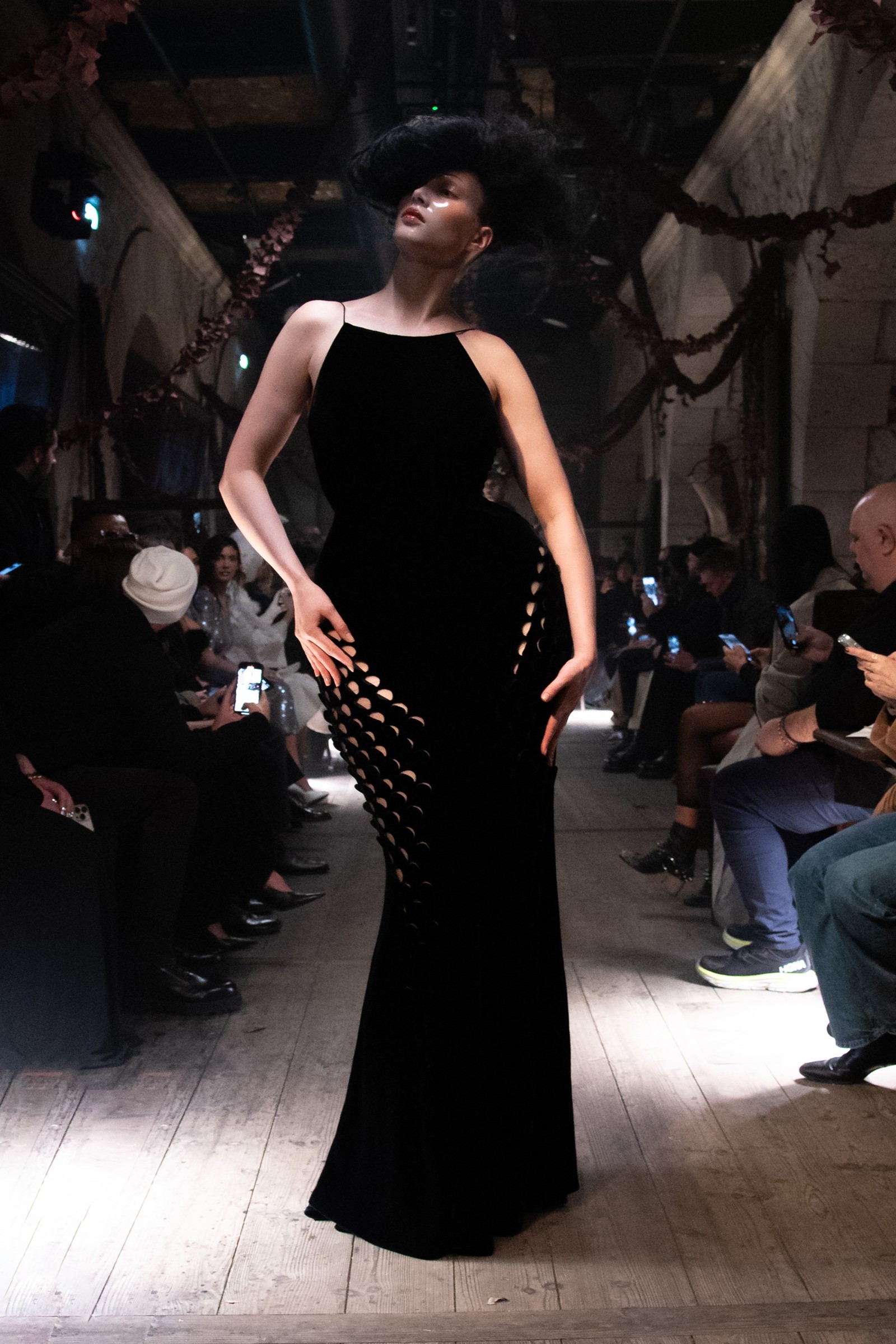


The above forty-four images are courtesy of: Dazed


Wednesday, 12 July 2023

Shades of Grey


Thom Browne

Image courtesy of: Grailed


Every collection starts with the gray suit. And this collection, it's taking that gray suit and seeing how it's been conceptualized, pulled and prodded, in so many ways over the last 20 years.
 ~ Thom Browne


The Autumn/Winter 2023-2024 Haute Couture collections were a curious bunch: on the one hand, the well-entrenched, storied Houses showed collections that were uninspiring, well-nigh verging on the banal, on the other, seemed avant-garde merely for the sake of being avant-garde without rhyme, reason or comprehension other than to shock and possibly garner social media traction; still, others relied heavily on embellishment, overwhelming and fatiguing the eye with all the glitter and sparkle of beads, stones and sequins. That said, though, it must be acknowledged that the craftsmanship and breathtaking skills (not to mention the time, effort and years of expertise) required to produce these collections are undoubtedly admirable and respectable; all that embellishment, however, reduces fashion to mere “confection”. And while it's understandable that the new generation of designers is keen on challenging the accepted norms while simultaneously working within the rigid confines of couture's rules, they risk being incomprehensive, their collections being no more than compilations of addled, disconnected ideas haphazardly tossed together.

Two collections, however, stood out from the rest: one, a hypnagogic, tailored mishmash of embroideries, patchwork, strange head-pieces and ballooning, exaggerated silhouettes, took place on the hallowed stage of the Opera National de Paris by a surprising newcomer to the world of haute couture (though not to mainstream American ready-to-wear fashion, since 2003, and with over fifty retail stores), who's conceptual collection, reminiscent of those of Viktor & Rolf, was that of designer (and CFDA Chairman) Thom Browne. The press found themselves seated on the stage of the Opera while the auditorium seats were populated by (some two thousand) cardboard cut-out illustrations resembling the American designer, all “dressed” in the brand's signature grey suits.

Inspired by Visage's 1980 song “Fade to Grey” and comprising fifty-eight looks, the theme of the collection, surreal as it may have appeared, was that of a despondent girl (in the form of Alek Wek) who finds herself in a railway station reflecting on her life, her fantasies are envisaged, coming to life and walking past her. The other theme, it appears, was bells: hanging over the stage was a large (grey) bell; some models wore bell-shaped cloche hats with holes through which to see; shoes had bells dangling from their back ends. But as surreal as this debut collection may have been, what made it cohesive was its central colour palette: varying shades of grey, relieved, only towards the end, with white in the last few ensembles shown.


Video, via YouTube: FF Channel


Jean Paul Gaultier

Image courtesy of: S/Magazine


As a French boy, we know Jean Paul Gaultier from birth. He was the one who made me think that it was a real job to design and do fashion. ~ Julien Dossena


The other stand-out collection was that of fashion's one-time enfant terrible, the unconventional Jean-Paul Gaultier, famed for his innovative, gender-fluid/culture-blending collections. After announcing his retirement on Twitter and Instagram in January of 2020, M. Gaultier has done something no other living designer has ever done before: since 2021 and for each of his bi-annual haute couture collections (the first couture collection, entitled “Atmosphere of a Couture Salon” and presented in January of 1997 during the Spring/Summer Haute Couture collections, was quintessentially Parisian in spirit; the men's and women's ready-to-wear branches of the brand was discontinued in September of 2014), a guest designer is invited and given carte-blanche to creatively direct his or her season by reworking, reimagining and reinterpreting past Gaultier archival designs, which are considerable. Previous designers have included the likes of Olivier Rousteing, Haider Ackermann and Glenn Martens to name a few. The most recent hand-chosen name added to the roster of guest designers (and the fifth designer to helm the latest Gaultier couture collection) was that of Julien Dossena, currently the creative director at Paco Rabanne. (M. Gaultier himself attends each presentation strictly as an audience member, viewing each collection for the first time, in real time, along with other members of the audience.)

Intimately staged at Gaultier headquarters on Rue Saint-Martin on July 5th (recalling the intimacy and audience proximity of early Gaultier couture presentations) and set to a soundtrack of heeled shoes walking on pavement (and accompanied by other street noises), the collection revisited and referred to such elemental Maison Gaultier codes as the infamous cone-bra/dress, corsetry, lingerie, the tailored pin-striped suit, “nude” bodysuits, oversized trapper hats, tartan and, of course, a reinterpretation of the House's hallmark: the iconic blue-and-white striped La Mariniere, this latest version rendered in mohair and feathers. In addition to celebrating the Maison Gaultier codes, Dossena also integrated a hint of the Paco Rabanne aesthetic into the collection in the form of mesh-chainmail and metalwork.

Nothing in fashion is new; everything has already been done; fashion is cyclical. And as has already been articulated in previous posts, haute couture is a laboratory of ideas where a designer's ideas and concepts have no limits; a designer is limited only by his or her imagination. Nevertheless, the primary aim of genuinely good design (whether it be fashion or not) is to elicit an emotional response in the viewer. If couture collections are uninspiring or mundane then there is no point in going to the expense of creating and presenting them; they risk becoming nothing more than very costly ready-to-wear. It is unfortunate that the sets and (cinematic) productions of fashion presentations are more interesting than the collections themselves; it speaks volumes on the state of contemporary fashion. Perhaps M. Gaultier has the correct approach: instead of appointing a permanent creative director after a designer's demise or retirement, it may be a better solution to designate a different designer for each season, thus giving each collection a different viewpoint, a different interpretation of a House's design/aesthetic codes, added to which is the element of surprise to see what every designer will show that season. Admittedly, not every collection will be stellar and some designers will better perform than others but it's a brilliant concept and one which brings freshness to couture and thus keep it (and its crafts) relevant. And isn't that the point of couture's existence?


Video courtesy of YouTube: Jean Paul Gaultier


Sources: Dolan, Leah, Thom Browne on the inspiration behind his first ever couture collection, CNN, July 4, 2023; Mower, Sarah, Vogue, July 3, 2023; Redacao, Jean-Paul Gaultier Announces Retirement After 50 Years in Fashion. L'Officiel, January 19, 2020; Kilcooley-O'Halloran, Scarlett, Jean Paul Gaultier to Stop RTW Collections, British Vogue, September 15, 2014; Bateman, Kristen, Jean Paul Gaultier Couture Presents a New Era of Archival Fashion, W Magazine, July 5, 2023; European Fashion Heritage Association, Jean Paul Gaultier: The Couture Years, January 24, 2020.